Skip to the archive
Individual books remain freeHelp preserve the shelves
From the archive · Magic Books Catalog #2

Sumerian Lexicon

by John Alan Halloran

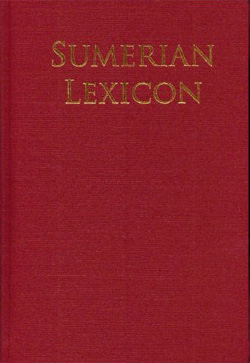
Cover of Sumerian Lexicon by John Alan Halloran

taken from the archive597times

The Sumerian Lexicon by John Alan Halloran is a well-known tool among the new generation of scholars and students, who have downloaded and consulted it (from the web site sumerian.org) since the very beginning of the project in 1999. The published version here under review collects 6,400 entries bringing together the lexical contributions of the last half-century of Sumerian studies. Regrettably, the provided list… Read on ›

AuthorAll books of John Alan Halloran
FormateBook, 521.0 Kb
ShelvesMystic and Occultism

The whole Magic Books Catalog #2 in one ZIP

DarkBooks is a living archive of magical literature, kept since 2008 by its curator and by the readers who support it. Readers have taken 2.4 million books from it — and every one of them stays free. Become one of the keepers ›

About the book

The Sumerian Lexicon by John Alan Halloran is a well-known tool among the new generation of scholars and students, who have downloaded and consulted it (from the web site sumerian.org) since the very beginning of the project in 1999. The published version here under review collects 6,400 entries bringing together the lexical contributions of the last half-century of Sumerian studies. Regrettably, the provided list of 96 sources, inexplicably not arranged by year or author but by date of use. is de facto of little use. This printed version of the Sumerian Lexicon improves the electronic Version 3.0 by adding 2,600 new entries, as well as correcting and expanding many of the previous entries and features.

The concise dictionary provides word definition, hamtu and maru forms for some verbs, extensive cross-references to M.-L. Thomsen's The Sumerian Language (Copenhagen 1984), notations of Archaic Frequency of the signs and Emesal equivalents in addition to the main forms. A tentative etymology is sometimes given after a word definition. Perhaps the strongest point of the book is the wide range of actually-used meanings for each word and the large number of entries which makes the lexicon suitable for all kind of research, from the study of pure administrative documents to the analysis of literary texts. On the other hand, the author himself is well aware of the major shortcomings (see the Introduction) of the Sumerian Lexicon: it does not take into account the diachronic development or synchronic variation of the language and it does not quote any examples of word usage. Moreover, the author does not state from which of the sources he derives a particular meaning. However, it would be unfair to ask Halloran's Sumerian Lexicon to go beyond its author's intentions: an encyclopaedic description of the Sumerian language is still a desideratum and it not only requires group effort to be achieved but also the support of future linguistic studies of Sumerian which give fuller consideration to diachronic and synchronic changes. To conclude. Halloran's important book deserves our highest appreciation and gratitude as a highly useful and user-friendly tool ad usum Delphini as well as for experienced Assyriologists and scholars in different fields approaching the "obscure" Sumerian language and literature. --Orientalia Vol. 77 Fasc. 1 (2008)

With 6,400 entries, this is the most complete available lexicon of ancient Sumerian vocabulary. It replaces version 3 of the author's Sumerian Lexicon, which has served an audience of over 380,000 visitors since 1999. This published version adds over 2,600 new entries, and corrects or expands many of the previous entries. Also, following the express wish of a majority of online lexicon users, it has merged together and sorted the logogram words and the compound words into purely alphabetical order. This book will be an indispensable reference for anyone trying to translate Sumerian texts. Also, due to the historical position of ancient Sumer as the world's first urban civilisation, cultural and linguistic archaeologists will discover a wealth of information for research.

Not every book of the collection can be downloaded because of copyright, although most of them have no such restrictions. If you find a copyright violation, please write to the curator's email: I am attentive to copyright and try to avoid any violation, while helping all who study magic to reach its literature.

Christina DebesCurated by Christina Debes since 2008
KEEP THE LIBRARY FREE

Choose the kind of support that works for you

Individual public-domain books remain free. Paid options provide convenient ZIP archives and help cover hosting, storage, research and preservation.

ONE-TIME

Starter Archive

$12

The Magic Catalog #1 in one curated ZIP file. A simple way to try the archive format.

Get the starter archive
ONGOING SUPPORT

Become a Member

from $5/month

Choose Library Keeper, Archivist or Grand Curator for updates, archive access and a voice in future collections.

See membership levels

Prefer individual books? Continue browsing and downloading them free of charge. Membership is support, not a paywall for the public library.

Make a direct cryptocurrency donation
Bitcoin (BTC network)15Kz1Zuq9FHugjCc3Xamdikdu6irQUHdqG
Ethereum (ETH / ERC-20)0x90c9d66cd07efa5c413551cfd5c2ce03c986b143
The same shelf

More books beside this one

Most taken from the archive
  • 50 Of The Most Powerful Spells On The Face Of Earth
  • Basic Techniques of Sex Magick
  • Book Of Spells
  • Black Book of Forbidden Knowledge Lucid Dreaming
  • The Book Of Shadows
  • The Book Of Secrets
  • Control of The Astral Body
  • White Magic Spells
  • Magick
  • The Book Of Raziel The Angel Or Sefer Raziel HaMalakh
  • The Book Of Thoth
  • The Complete Simon Necronomicon

Looking for a book that is not here? It may be in my home library: write to the curator's email and I will try to help — I can send the book by email.