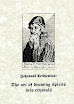
Johannes Trithemius - Steganographia Secret Writing (200.0 Kb)
 Book downloads: 991
This is Trithemius' most notorious work. On the surface it is a system of angel magic, but within is a highly sophisticated system of cryptography. It claims to contain a synthesis of the science of knowledge, the art of memory, magic, an accelerated language learning system, and a method of sending messages without symbols or messenger. In private circulation, the Steganographia brought such a reaction of fear that he decided it should never be published. He reportedly destroyed the more extreme portions (presumably instruc... More >>>Book can be downloaded.
Note that, unfortunately, not all my books can be downloaded due to the restrictions of copyright. However, most of the books on this site do not have copyright restrictions. If you find any copyright violation, please contact me at  . I am very attentive to the issue of copyright and try to avoid any violations, but on the other hand to help all fans of magic to get access to information.
If you are having difficulty downloading books, or you are looking for a book that is not on the site (but maybe it is in my home library), please write me a email to
and I will try to help, I can send the book by e-mail
darkbooks.org began in early 2008 I am happy to donate my time to providing you this resource, I would also like to note, that, although I try, I do not always have enough time to deal with the site, including, unfortunately, I do not always have time to answer all letters, because I have to earn money for a living. If you can financially help me, it would free me from the worries of earning money for living, perhaps partially, but ideally completely, then all 100% of my time could be devoted to the site. Also I do pay monthly web server/files storage and hosting costs to keep this site on the air. Please consider making a donation to help me continue this activity and devote more time to it or at least offset the cost of paying for storage/hosting. Even a small contribution helps!
This is Trithemius' most notorious work. On the surface it is a system of angel magic, but within is a highly sophisticated system of cryptography. It claims to contain a synthesis of the science of knowledge, the art of memory, magic, an accelerated language learning system, and a method of sending messages without symbols or messenger. In private circulation, the Steganographia brought such a reaction of fear that he decided it should never be published. He reportedly destroyed the more extreme portions (presumably instructions for prophecy/divination) but it continued to circulate in mss form and was eventually published posthumously in 1606. Many of the details of the spirits described here also occur in Lemegeton.
About Author:
Johannes Trithemius (1 February 1462 - 13 December 1516) was born Johann Heidenberg. The name by which he is more commonly known is derived from his native town of Trittenheim on the Mosel in Germany.
He studied at the University of Heidelberg. Travelling from university back to his home town in 1482, he was surprised by a snowstorm and took refuge in the Benedictine abbey of Sponheim near Bad Kreuznach. He decided to stay and was elected abbot in 1483, at the age of twenty-one. He set out to transform the abbey from a poor, undisciplined and ruinous place into a centre of learning. In his time, the abbey library increased from around fifty items to more than two thousand. However, his efforts did not meet with praise, and his reputation as a magician did not further his acceptance. Increasing differences with the convent led to his resignation in 1506, when he decided to take up the offer of the Lord Bishop of Wurzburg, Lorenz von Bibra (bishop from 1495 to 1519), to become abbot of the Schottenkloster ("Scottish monastery") in Wurzburg. He remained there until the end of his life.
Among his pupils were Heinrich Cornelius Agrippa (1486 - 1535) and Paracelsus (1493 - 1541).
His most famous work is Steganographia (written c.1499; published Frankfurt, 1606, placed on the Index Librorum Prohibitorum in 1609). This book is in three volumes, and appears to be about black magic - specifically, about using spirits to communicate over long distances. Since the publication of the decryption key to the first two volumes in 1606, they have been known to be actually concerned with cryptography and steganography. Until recently, the third volume was widely still believed to be about magic - but recently the "magical" formulae were shown to be covertexts for yet more cryptography content. The work has lent its name to the modern field of steganography.
Other works include De septum secundeis (The Seven Secondary Intelligences, 1508), a history of the world based on astrology; Annales Hirsaugiensis (1514); and Polygraphia (1518).