Skip to the archive
Individual books remain freeHelp preserve the shelves
From the archive · Magic Books Catalog #1

Echoes From The Gnosis Vol VI A Mithriac Ritual

by George Robert Stowe Mead

Cover of Echoes From The Gnosis Vol VI A Mithriac Ritual by George Robert Stowe Mead

taken from the archive346times

Theauthor describes a Mithriac Ritual that was a secret and solemn inner rite for one person only, highlighting its exclusive and intimate nature. This is a strikingly unique aspect of the ritual, as it contrasts with the more public nature of many other ancient ceremonies. The author notes that the Ritual was unearthed from a mysterious source, the Paris Magic Papyrus 574, which dates back to the early fourth… Read on ›

AuthorAll books of George Robert Stowe Mead · Biography · Images
FormateBook, 4.4 MB
ShelvesRituals and Rites

The whole Magic Books Catalog #1 in one ZIP

DarkBooks is a living archive of magical literature, kept since 2008 by its curator and by the readers who support it. Readers have taken 1.9 million books from it — and every one of them stays free. Become one of the keepers ›

About the book

Theauthor describes a Mithriac Ritual that was a secret and solemn inner rite for one person only, highlighting its exclusive and intimate nature. This is a strikingly unique aspect of the ritual, as it contrasts with the more public nature of many other ancient ceremonies. The author notes that the Ritual was unearthed from a mysterious source, the Paris Magic Papyrus 574, which dates back to the early fourth century A.D. This discovery is significant because it provides a complete account of a Mithriac ceremony, unlike other fragments that are mostly hymns. The Ritual's exclusivity and the effort required to uncover it add to its intrigue, suggesting a deep level of secrecy and importance within the Mithriac cult.

The central focus is on the transformation of the individual's soul through purification and the attainment of a higher state of consciousness. The author emphasizes the necessity of possessing a 'RITUAL fraction of the thing' to truly grasp or experience the deeper mysteries. A concrete example is the idea that the candidate has 'created a nucleus' and is 'with pure purities now purified,' indicating a spiritual awakening and the ability to connect with higher cosmic elements. This process involves the 'Great Breath of Life' and the 'Holy Fire,' symbolizing the rebirth in Mind and the connection to divine realms.

The author's text explores the mystery of transcending mortality through spiritual rebirth, as seen in the invocation of 'Deathless Spirit, Water, Solid, and Air' to achieve a vision of the Deathless Source. This ritual emphasizes the union of the practitioner with divine elements, seeking to overcome the 'insistent Need' and 'Bitterness' of existence, ultimately aiming for a state of enlightenment and rebirth in Mind.

Zosimus, the Pcemandrist, describes the Inner Door as a gateway to the True Heaven, a concept echoed in the Mithriac Ritual. The passage highlights the importance of the Inner Door as a threshold between the material and spiritual realms, leading to a deeper understanding of the self. The ritual involves a series of steps, including the candidate's journey through various stages of initiation and purification, culminating in a profound spiritual experience.

Theauthor states that Mithra was not the Sun in either the Iranian religion or the Mithriac Mysteries, contradicting common associations. This is a surprising fact as Mithra is often linked with the Sun in various traditions. The author clarifies that the Sun is actually the Archangel of Mithra, representing the Light and serving as the chief mind-power of the Mind of all masterhood. This distinction highlights the complex and nuanced theological framework within the Mithriac Ritual, where celestial beings and their roles are meticulously defined. The author's assertion challenges simplistic interpretations and underscores the depth of the ritual's esoteric teachings.

Not every book of the collection can be downloaded because of copyright, although most of them have no such restrictions. If you find a copyright violation, please write to the curator's email: I am attentive to copyright and try to avoid any violation, while helping all who study magic to reach its literature.

About the author

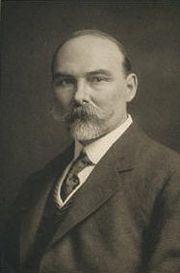
George Robert Stowe Mead George Robert Stowe Mead (1863-1933) was an author, editor, translator, esotericist, and an influential member of the Theosophical Society as well as the founder of the Quest Society.

Birth and family

George Robert Stowe Mead was born at Neneaton, Warwickshire, England on the 22nd of March 1863. He was born to Colonel Robert Mead, an Officer in the British Army and to Mary Mead, who had receivied a traditional education at Rochester Cathedral School.

Education at Cambridge University

Having shown academic potential George Mead began studying mathematics at St John's College, Cambridge. Eventually shifting his education towards the study of Classics he gained much knowledge of both Greek and Latin. In 1884 he completed a bachelor of arts degree, in the same year he also began to practice the position of public school master.

Activity with the Theosophical Society

While still at Cambridge University Mead read Esoteric Buddhism by Alfred Percy Sinnett, this comprehensive theosophical account of the eastern religion prompted Mead to contact two theosophists in London named Bertam Keightly and Mohini Chatterji which eventually led him to join the Theosophical Society.

Mead became a member of Helena Petrovna Blavatsky's Theosophical Society in 1884. He abandoned his teaching profession in 1889 to be Blavatsky's private secretary and also became a joint-secretary of the Esoteric Section (E.S.) of the Theosophical Society, the E.S. was for those whom the Theosophical Society deemed more advanced.

G.R.S Mead received Blavatsky's six Esoteric Instructions and other teachings at twenty-two meetings headed by Blavatsky which were only attended by the Inner Group of the Theosophical Society. It was because of the intimacy Mead felt with the Inner Group that he married Laura Cooper in 1899.

Contributing intellectually to the Theosophical Society, at first most interested in eastern religions he quickly became more and more attracted to western esotericism of religion and philosophy, particularly Neoplatonism, Gnosticism and Hermeticism though his scholarship and publications continued to engage with eastern religion. Making many contributions to the Theosophical Society's Lucifer as joint editor he eventually became the sole editor of The Theosophical Review in 1907 (as Lucifer was renamed in 1897).

As of February 1909 George Robert Stowe Mead and some seven-hundred members of the Theosophical Society's British Section resigned from the Theosophical Society in protest of Annie Besant's reinstating of Charles Webster Leadbeater to the Theosophical Society. Leadbeater had been a prominent member of the Theosophical Society in 1906 until he was met with allegations of teaching masturbation under the guise of occult training to the sons of some American Theosophists. While this prompted Mead's leave of the society his frustration at the dogmatism of the Theosophical Society may have been a major contributor to his breaking with the society. He had been a member for twenty-five years.
The Quest Society

In March of 1909 Mead founded the Quest Society, composed of 150 defectors of the Theosophical Society and 100 other new members. Very intentionally this new society was planned to be an undogmatic approach to the comparative study and investigation of religion, philosophy, and science. The Quest Society had lectures at Kensington Town Hall in central London but its most focused effort was in its publishing of The Quest: A Quarterly Review which ran from 1909-1931 with many contributors.
Influence

Among notable names influenced by G.R.S. Mead there can be found: Ezra Pound, W.B. Yeats, Hermann Hesse, Kenneth Rexroth, and Robert Duncan. Carl Gustav Jung was also influenced by George Mead, himself owning at least eighteen of Mead's books.

Works

* Simon Magus (1892)
* Orpheus (1895/6)
* Pistis Sophia Pistis Sophia (1896, 1921 ed).
* Fragments of a Faith Forgotten (London and Benares, 1900)
* Apollonius of Tyana 1905. from which a selection
* Thrice Greatest Hermes: Studies in Hellenistic Theosophy and Gnosis, 3 Volumes (London: Theosophical Publishing Society, 1906)
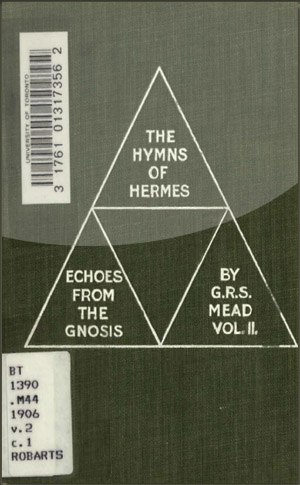
* The Hymns of Hermes
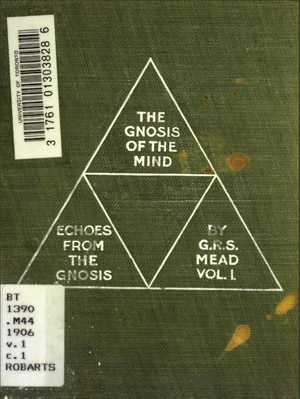
* The Gnosis of the Mind
* Commentary on "P?mandres"
* Introduction to Pistis Sophia
* Fragments of a Faith Forgotten (1900 1st edition); 3rd edition 1931 pp.241- 249 Introduction to Marcion
* Gnostic John the Baptizer: Selections from the Mand?an John-Book (1924)
* Did Jesus Live 100 BC?
* Address read at H.P. Blavatsky's cremation
* Concerning H.P.B.
* Doctrine of the Subtle Body in Western Tradition
Christina DebesCurated by Christina Debes since 2008
KEEP THE LIBRARY FREE

Choose the kind of support that works for you

Individual public-domain books remain free. Paid options provide convenient ZIP archives and help cover hosting, storage, research and preservation.

ONE-TIME

Starter Archive

$12

The Magic Catalog #1 in one curated ZIP file. A simple way to try the archive format.

Get the starter archive
ONGOING SUPPORT

Become a Member

from $5/month

Choose Library Keeper, Archivist or Grand Curator for updates, archive access and a voice in future collections.

See membership levels

Prefer individual books? Continue browsing and downloading them free of charge. Membership is support, not a paywall for the public library.

Make a direct cryptocurrency donation
Bitcoin (BTC network)15Kz1Zuq9FHugjCc3Xamdikdu6irQUHdqG
Ethereum (ETH / ERC-20)0x90c9d66cd07efa5c413551cfd5c2ce03c986b143
The same shelf

More books beside this one

Most taken from the archive
  • 50 Of The Most Powerful Spells On The Face Of Earth
  • Basic Techniques of Sex Magick
  • Book Of Spells
  • Black Book of Forbidden Knowledge Lucid Dreaming
  • The Book Of Shadows
  • The Book Of Secrets
  • Control of The Astral Body
  • White Magic Spells
  • The Book Of Raziel The Angel Or Sefer Raziel HaMalakh
  • The Book Of Thoth
  • Magick In Theory And Practice
  • The Darkside Of The Moon A Complete Course In Magic And Witchcraft

Looking for a book that is not here? It may be in my home library: write to the curator's email and I will try to help — I can send the book by email.