Skip to the archive
Individual books remain freeHelp preserve the shelves
From the archive · Howard Phillips Lovecraft Books Catalog

Herbert West Reanimator

by Howard Phillips Lovecraft

Cover of Herbert West Reanimator by Howard Phillips Lovecraft

taken from the archive291times

Count Dracula's assertion that 'there are far worse things awaiting man than death' underscores the central mystery of the book, exploring the moral and existential implications of resurrection. The passage highlights the unsettling notion that death may not be the ultimate fate but a threshold to something more sinister, reflecting the cosmic horror theme prevalent in Lovecraft's work. This idea is central to the… Read on ›

AuthorAll books of Howard Phillips Lovecraft · Biography · Images
FormateBook, 209.0 Kb
ShelvesHorror Tales

The whole Howard Phillips Lovecraft Books Catalog in one ZIP

DarkBooks is a living archive of magical literature, kept since 2008 by its curator and by the readers who support it. Readers have taken 1.9 million books from it — and every one of them stays free. Become one of the keepers ›

About the book

Count Dracula's assertion that 'there are far worse things awaiting man than death' underscores the central mystery of the book, exploring the moral and existential implications of resurrection. The passage highlights the unsettling notion that death may not be the ultimate fate but a threshold to something more sinister, reflecting the cosmic horror theme prevalent in Lovecraft's work. This idea is central to the narrative, suggesting that the pursuit of reanimation could lead to unforeseen and terrifying consequences, challenging the reader to consider the true nature of existence and the limits of human understanding.

A black form on the floor in an abandoned barn, a defeated boxer's corpse, becomes the central object. The author describes the process of dressing and carrying the body home, highlighting the eerie and unsettling nature of the situation. The body, a defeated boxer, is treated with a mix of fear and urgency, reflecting the characters' desperation and the moral ambiguity of their actions. The description of the body's appearance and the subsequent handling underscores the macabre and supernatural elements of the narrative, emphasizing the tension between human morality and the pursuit of scientific experimentation.

The author highlights West's choice of a location overlooking an ancient burying-ground, driven by both symbolic and aesthetic motivations, which underscores the tension between scientific ambition and moral responsibility. This decision reflects the broader theme of the book, where the pursuit of knowledge and the desire to transcend mortality clash with the inherent dangers of playing God. The author's portrayal of West's descent into madness illustrates the perilous boundary between scientific discovery and the violation of natural order.

In the early hours of the morning, the characters had prepared a grave in the cellar of the farmhouse, intending to bury the revived corpse by dawn. This action was driven by the need to prevent any potential discovery of their experiment, as they feared the possibility of a ghoulish revelation. The grave was meant to be a final resting place for the reanimated body, but the situation took a dark turn when the house was later found burned to ashes, and a new grave in the potter's field was disturbed, suggesting the presence of something supernatural. The author describes the grave-digging as a critical step in their plan, highlighting the tension and urgency surrounding their experiment.

The passage details the protagonist's experience with the reanimated corpse, including the hideous, inhuman shriek that echoes through the narrative, underscoring the horror and supernatural elements of the story. This scream serves as a chilling reminder of the unnatural and terrifying consequences of West's experiments, reflecting the broader themes of the book concerning the dangers of playing God and the unknown forces beyond human comprehension.

Not every book of the collection can be downloaded because of copyright, although most of them have no such restrictions. If you find a copyright violation, please write to the curator's email: I am attentive to copyright and try to avoid any violation, while helping all who study magic to reach its literature.

About the author

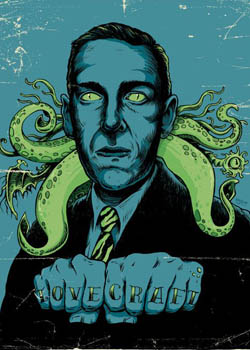
Howard Phillips Lovecraft Howard Phillips Lovecraft (August 20, 1890 - March 15, 1937) was an American author of horror, fantasy, and science fiction, known then simply as weird fiction.

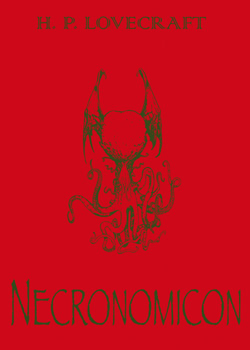
HP Lovecraft was one of the early exponents of horror fantasy, best known for the series of works known collectively as the Cthulhu Mythos. He peppered his books with references to an occult work called The Necronomicon, and, as his fame grew, he was besieged by readers asking where they could find a copy of it. But the truth was that Lovecraft had invented the book and its title. He wrote in a letter of 1937: 'The name Necronomicon (necros, corpse; nomos, law; eikon, image = An Image of the Law of the Dead) occurred to me in the course of a dream, although the etymology is perfectly sound.' So the title came before everything else, and substituted, perfectly reasonably, for the work itself.

This is a game that many writers have played, and the history of literature is full of references to books that don't, in fact, exist. Margaret Atwood, AS Byatt, Dorothy L Sayers, Frank Herbert, Martin Amis, Arthur Conan Doyle and many, many others have all joined in. Some of my favourite fictional titles are from Kurt Vonnegut, who, as Kilgore Trout, writes non-existent works such as The Barring-Gaffner of Bagnialto, or This Year's Masterpiece, which are usually accompanied by helpful plot summaries. Perhaps the most notorious fictional-book-inventors have been writers such as Umberto Eco and Jorge Luis Borges; naturally enough, since their writing often draws attention to literature as itself an artefact.

With the Necronomicon there was a difference, however. Other writers began to treat it as if it really did exist, quoting from the nonexistent work and even composing large sections of it; several Necronomicons were in fact later published, by hoaxers including L. Sprague De Camp and Colin Wilson.

Lovecraft's major inspiration and invention was cosmic horror, the idea that life is incomprehensible to human minds and that the universe is fundamentally alien. Those who genuinely reason, like his protagonists, gamble with sanity. Lovecraft has developed a cult following for his Cthulhu Mythos, a series of loosely interconnected fiction featuring a pantheon of human-nullifying entities, as well as the Necronomicon, a fictional grimoire of magical rites and forbidden lore. His works were deeply pessimistic and cynical, challenging the values of the Enlightenment, Romanticism, and Christian humanism. Lovecraft's protagonists usually achieve the mirror-opposite of traditional gnosis and mysticism by momentarily glimpsing the horror of ultimate reality.

Although Lovecraft's readership was limited during his life, his reputation has grown over the decades, and he is now commonly regarded as one of the most influential horror writers of the 20th century, who together with Edgar Allan Poe has exerted "an incalculable influence on succeeding generations of writers of horror fiction". Stephen King has called Lovecraft "the twentieth century's greatest practitioner of the classic horror tale.
Christina DebesCurated by Christina Debes since 2008
KEEP THE LIBRARY FREE

Choose the kind of support that works for you

Individual public-domain books remain free. Paid options provide convenient ZIP archives and help cover hosting, storage, research and preservation.

ONE-TIME

Starter Archive

$12

The Magic Catalog #1 in one curated ZIP file. A simple way to try the archive format.

Get the starter archive
ONGOING SUPPORT

Become a Member

from $5/month

Choose Library Keeper, Archivist or Grand Curator for updates, archive access and a voice in future collections.

See membership levels

Prefer individual books? Continue browsing and downloading them free of charge. Membership is support, not a paywall for the public library.

Make a direct cryptocurrency donation
Bitcoin (BTC network)15Kz1Zuq9FHugjCc3Xamdikdu6irQUHdqG
Ethereum (ETH / ERC-20)0x90c9d66cd07efa5c413551cfd5c2ce03c986b143
The same shelf

More books beside this one

Most taken from the archive
  • 50 Of The Most Powerful Spells On The Face Of Earth
  • Basic Techniques of Sex Magick
  • Book Of Spells
  • Black Book of Forbidden Knowledge Lucid Dreaming
  • The Book Of Shadows
  • The Book Of Secrets
  • Control of The Astral Body
  • White Magic Spells
  • The Book Of Raziel The Angel Or Sefer Raziel HaMalakh
  • The Book Of Thoth
  • Magick In Theory And Practice
  • The Darkside Of The Moon A Complete Course In Magic And Witchcraft

Looking for a book that is not here? It may be in my home library: write to the curator's email and I will try to help — I can send the book by email.