Mindy Macleod - Bandrunir in Icelandic Sagas (86.0 Kb)
 Book downloads: 493
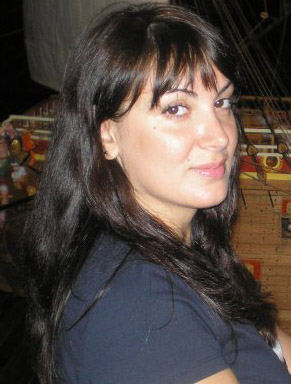
Dr MINDY MCLEOD teaches in the Department of Linguistics, Deakin University, Melbourne;Book can be downloaded.
Note that, unfortunately, not all my books can be downloaded due to the restrictions of copyright. However, most of the books on this site do not have copyright restrictions. If you find any copyright violation, please contact me at  . I am very attentive to the issue of copyright and try to avoid any violations, but on the other hand to help all fans of magic to get access to information.
If you are having difficulty downloading books, or you are looking for a book that is not on the site (but maybe it is in my home library), please write me a email to
and I will try to help, I can send the book by e-mail
darkbooks.org began in early 2008 I am happy to donate my time to providing you this resource, I would also like to note, that, although I try, I do not always have enough time to deal with the site, including, unfortunately, I do not always have time to answer all letters, because I have to earn money for a living. If you can financially help me, it would free me from the worries of earning money for living, perhaps partially, but ideally completely, then all 100% of my time could be devoted to the site. Also I do pay monthly web server/files storage and hosting costs to keep this site on the air. Please consider making a donation to help me continue this activity and devote more time to it or at least offset the cost of paying for storage/hosting. Even a small contribution helps!
The Sagas of Icelanders (Icelandic: Islendingasogur)--many of which are also known as family sagas--are prose histories mostly describing events that took place in Iceland in the 10th and early 11th centuries, during the so-called Saga Age. They are the best-known specimens of Icelandic literature. The Icelanders' sagas are a literary phenomenon of the thirteenth and fourteenth centuries. They are focused on history, especially genealogical and family history. They reflect the struggle and conflict that arose within the societies of the second and third generations of Icelandic settlers. The authors of these sagas are unknown. One, Egils saga, is believed by many modern scholars to have been written by Snorri Sturluson, a descendant of the saga's hero, but this remains uncertain. The standard modern edition of Icelandic sagas is known as Islenzk Fornrit.
Runic echoes permeate saga literature the runes of divine origin, runar reginkunnar, of the Sparlosa and Noleby stones recur in Havamal, while the evocative Swedish Skarpaker runestone (Jor > skal rifna ok upphiminn) or the Danish Ribe stick (Jor > bi > ek uar>a ok upphiminn) are strongly reminiscent of Germanic poetry (cf. Jansson 1987: 140f.). References to elves and trolls, and even invocations to pagan deities occur in medieval runic inscriptions, attesting to a continuing appreciation of Norse legends (Liestol 1964: 37 Hagland 1994: 132), while runic poetry in the metres of drottkvaett, hrynhenda, ljpahattr and galdralag testify to the continuance of the scaldic and eddic literary tradition. There are several runic inscriptions reminiscent of poems known from the Edda or other Norse literature (Liestol 1964: 29ff.) and, more significantly, fragments of identifiable Norse poetry recur among the medieval runic inscriptions. 1 The runic corroboration of saga verse is an important historical record of the survival of this literary tradition. From Trondheim comes a rune-stick (A 142) 1 These include B 249, containing part of a lausavIsa in drottkvaett, GamanvIsur
Dr MINDY MCLEOD teaches in the Department of Linguistics, Deakin University, Melbourne;