Skip to the archive
Individual books remain freeHelp preserve the shelves
From the archive · Witchcraft And Wicca Books Catalog #1

The Well Read Witch

by Carl McColman

Cover of The Well Read Witch by Carl McColman

Theauthor explores how books serve as vital tools in witchcraft, emphasizing their role in preserving and transmitting magical knowledge. In the passage, the author describes attending a Wiccan ritual where the importance of books is implicitly acknowledged through the gathering around a kitchen table, discussing the significance of literature in the practice. The author's focus is on the intersection of oral… Read on ›

AuthorAll books of Carl McColman · Biography · Images
FormateBook
ShelvesWicca and Witchcraft

This page is only a review of the book: its copyright does not allow downloading. The cover is shown at low resolution to illustrate the review, as non-profit fair use.

Free books by Carl McColman · Browse top public-domain books

DarkBooks is a living archive of magical literature, kept since 2008 by its curator and by the readers who support it. Readers have taken 1.9 million books from it — and every one of them stays free. Become one of the keepers ›

About the book

Theauthor explores how books serve as vital tools in witchcraft, emphasizing their role in preserving and transmitting magical knowledge. In the passage, the author describes attending a Wiccan ritual where the importance of books is implicitly acknowledged through the gathering around a kitchen table, discussing the significance of literature in the practice. The author's focus is on the intersection of oral tradition and written texts, highlighting how books help maintain the continuity of magical practices across generations. The author argues that books are not just repositories of information but active participants in the spiritual and magical lives of witches, bridging the gap between ancient wisdom and modern practitioners.

Theauthor emphasizes that rituals are essential for connecting with the Spirit realm, involving movement, action, and drama. Rituals are described as actions designed to foster communication with the Spirit realm, serving as a bridge between the physical and spiritual worlds. The author highlights that rituals can range from simple acts like lighting a candle to complex ceremonies, reflecting the diversity of magical practices within Wicca. The central subject of the book is the significance of rituals in Wiccan tradition, underscoring their role in facilitating spiritual connections and personal growth.

The-author notes that the Internet and Wicca both offer refuge from a world seen as overly centralized and profit-driven. This contrast highlights how both realms provide spaces for alternative thinking and spiritual exploration, allowing individuals to escape mainstream pressures and embrace more personalized, community-based practices.

Thecentral mystery the author raises is the resurgence of Paganism in modern society. The author highlights how Paganism has been reborn in our industrial/ technological culture because of a burning desire felt by so many people who wish to reconnect with Nature and the spirituality of our ancestors. This suggests a deep-seated human need to find meaning and connection in a world that often feels disconnected and mechanized. The author presents this as a fundamental aspect of the spiritual renaissance, indicating that Paganism, including Wicca, offers a pathway to reconnect with nature and ancestral spirituality. This idea is supported by the author's comparison of Pagan communities to locally owned businesses, emphasizing the importance of community and individual connection in a globalized world.

Carlo Ginzburg suggests that shamanism represents the ancient spiritual practices of pre-Christian Europe, which were suppressed during the witch hunts. The author highlights that shamanism is deeply connected to the natural world, emphasizing practices like spirit contact, rituals, and the use of sacred plants and stones. This primal spirituality contrasts with the more intellectual aspects of mysticism and meditation, offering a grounded, embodied approach to spiritual practice. The author argues that while meditation and mysticism can leave one mentally engaged but physically stagnant, shamanism provides a balance by engaging the body and nature. This perspective is crucial in understanding how Wicca integrates both mystical and shamanic elements to create a holistic spiritual practice.

Not every book of the collection can be downloaded because of copyright, although most of them have no such restrictions. If you find a copyright violation, please write to the curator's email: I am attentive to copyright and try to avoid any violation, while helping all who study magic to reach its literature.

About the author

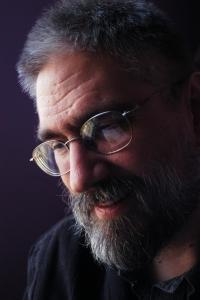
Carl McColman Hi. My name is Carl McColman. Thanks for visiting my website. Although I was an Air Force kid, I spent virtually my entire childhood in Hampton, Virginia, and so I can confidently say "that's where I'm from." As an adult I've lived in West Virginia, Virginia, and Tennessee before settling in the metro Atlanta, Georgia area, where I remain, having moved here in 1993 when I got married. I have a profoundly handicapped stepdaughter, which is why we remain near the big city, although I love being surrounded by trees and so I'm always daydreaming about moving somewhere far away from the metropolitan rat-race.

But the city does have its benefits: not only do I enjoy many friends with varied interests and backgrounds and lifestyles and values, but I am a member of a richly rainbow-hued, immigrant-heavy, multicultural church (at last count our membership boasted over 90 nationalities!) and I work for a bookstore owned by a Trappist monastery (which means I regularly can participate in the liturgical life of the monks, a blessing for which I never cease to give thanks). Although I've been interested in contemplative Christianity since my high school years, my spiritual journey has also included a long-standing interest in Neopaganism -- the spirituality of Goddess worship, nature veneration, reconstructed primal European religions like Druidism and postmodern equivalents like Wicca. For several years (right around the age of 40, imagine that) I was estranged from the church and identified as a Neopagan: a fact which is significant because I am also the author of several books, most of which concern neopagan spirituality. I returned to the intentional practice of the Christian faith in 2004, driven in large part by my ongoing devotion to Christian mysticism and my desire to express my personal spirituality in a contemplative manner, which for me is more easily done in a Christian rather than a Pagan context. As of this writing (January 2009) I am at work on a book about Christian mysticism due for publication in the spring of 2010; I've also begun work on a book exploring both the reasons why I abandoned Christianity for Neopaganism, as well as why I ultimately found my way back to the church.

Although I no longer identify as a Neopagan, the fact that I've written books about it means it will always be a part of me. But that's not just okay -- I count it as a blessing. I consider it a privilege to express my Christian spirituality in such a way that I can maintain a positive and gracious spirit of openness toward all that is good and true in other faiths. Paganism, like Buddhism and Vedanta and Judaism and Islam, can be a powerful means for grace to flow into our world. For this reason, I am happy to commend my books to anyone who would like to learn more about contemporary Pagan and Goddess spirituality. Please visit the books page to learn more about the books I've written. Finally, a few odds and ends about me: As I suspect this website makes obvious, I have a profound love for literature and for book collecting. Additionally, I am interested in vegan cuisine (I've been a vegetarian since 1987 and mostly-vegan since 2005), music (both sacred and secular, with a particular fondness for Renaissance choral music, British and Irish folk-rock, 70s prog-rock, and the good ol' Grateful Dead), cats (I am owned by three), disability issues (a concern that naturally arises from having a disabled family member) and the integral theory of Ken Wilber.
Christina DebesCurated by Christina Debes since 2008
KEEP THE LIBRARY FREE

Choose the kind of support that works for you

Individual public-domain books remain free. Paid options provide convenient ZIP archives and help cover hosting, storage, research and preservation.

ONE-TIME

Starter Archive

$12

The Magic Catalog #1 in one curated ZIP file. A simple way to try the archive format.

Get the starter archive
ONGOING SUPPORT

Become a Member

from $5/month

Choose Library Keeper, Archivist or Grand Curator for updates, archive access and a voice in future collections.

See membership levels

Prefer individual books? Continue browsing and downloading them free of charge. Membership is support, not a paywall for the public library.

Make a direct cryptocurrency donation
Bitcoin (BTC network)15Kz1Zuq9FHugjCc3Xamdikdu6irQUHdqG
Ethereum (ETH / ERC-20)0x90c9d66cd07efa5c413551cfd5c2ce03c986b143
The same shelf

More books beside this one

Most taken from the archive
  • 50 Of The Most Powerful Spells On The Face Of Earth
  • Basic Techniques of Sex Magick
  • Book Of Spells
  • Black Book of Forbidden Knowledge Lucid Dreaming
  • The Book Of Shadows
  • The Book Of Secrets
  • Control of The Astral Body
  • White Magic Spells
  • The Book Of Raziel The Angel Or Sefer Raziel HaMalakh
  • The Book Of Thoth
  • Magick In Theory And Practice
  • The Darkside Of The Moon A Complete Course In Magic And Witchcraft

Looking for a book that is not here? It may be in my home library: write to the curator's email and I will try to help — I can send the book by email.