Keith Thomas - Civility And The Decline of Magic (47.0 Kb)
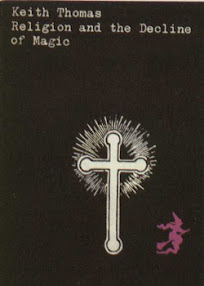 Book downloads: 262
One of the most puzzling aspects of the emergence of a new kind of world in the last few centuries in the West is the development of what we now call 'science'. The shift from a magical and religious dominated cosmology to a mechanistic and secular one, though far from complete and far from confined to the period roughly between 1550 and 1850, is in general undisputable. Until that time it had not happened in other civilizations such as China, Japan or the Islamic world, which had much earlier reached a higher level of craft... More >>>Book can be downloaded.
Note that, unfortunately, not all my books can be downloaded due to the restrictions of copyright. However, most of the books on this site do not have copyright restrictions. If you find any copyright violation, please contact me at  . I am very attentive to the issue of copyright and try to avoid any violations, but on the other hand to help all fans of magic to get access to information.
If you are having difficulty downloading books, or you are looking for a book that is not on the site (but maybe it is in my home library), please write me a email to
and I will try to help, I can send the book by e-mail
darkbooks.org began in early 2008 I am happy to donate my time to providing you this resource, I would also like to note, that, although I try, I do not always have enough time to deal with the site, including, unfortunately, I do not always have time to answer all letters, because I have to earn money for a living. If you can financially help me, it would free me from the worries of earning money for living, perhaps partially, but ideally completely, then all 100% of my time could be devoted to the site. Also I do pay monthly web server/files storage and hosting costs to keep this site on the air. Please consider making a donation to help me continue this activity and devote more time to it or at least offset the cost of paying for storage/hosting. Even a small contribution helps!
One of the most puzzling aspects of the emergence of a new kind of world in the last few centuries in the West is the development of what we now call 'science'. The shift from a magical and religious dominated cosmology to a mechanistic and secular one, though far from complete and far from confined to the period roughly between 1550 and 1850, is in general undisputable. Until that time it had not happened in other civilizations such as China, Japan or the Islamic world, which had much earlier reached a higher level of craft knowledge than anything then current in Europe. So why did it happen where it did, when it did, and why did it happen at all? A number of historians, for example Thomas Kuhn and Michel Foucault, have drawn attention to the 'paradigmatic' or 'epistemic' shift manifested in the work of Galileo, Descartes and others. Yet while providing examples of the shift, neither has been able to put forward any plausible explanation of why the shift occurred. Indeed they both specifically state that they leave it to others to explain why. More recently we have been given an excellent, revised, picture of the earlier magic cosmology and its continuity with the later 'scientific' one by Stuart Clark. Yet once again, the author explicitly states that he is not attempting to provide any explanation of why the cosmologies changed over time. Some of the most stimulating suggestions concerning the reasons for the change have, in fact, come from anthropologists, who draw attention to the importance of literacy, the 'trade-travel' complex, Protestantism, the clash of cultures and other factors in the movement to the 'Open society' of modern science and technology.