Skip to the archive
Individual books remain freeHelp preserve the shelves
From the archive · Magic Books Catalog #2

The Treasure Of Treasures For Alchemists

by Paracelsus

Cover of The Treasure Of Treasures For Alchemists by Paracelsus

taken from the archive1,317times

Theauthor asserts that philosophers have failed to recognize the third principle in alchemy, which is mineral water. Paracelsus claims that while others focused on mercury and sulfur, the true essence of alchemical transformation lies in the mineral water that coagulates the substance. This is a surprising claim as it challenges the traditional view of alchemical principles. This Balsam is natural and congenital,… Read on ›

AuthorAll books of Paracelsus · Biography · Images
FormateBook, 29.0 Kb
ShelvesAlchemical Works

The whole Magic Books Catalog #2 in one ZIP

DarkBooks is a living archive of magical literature, kept since 2008 by its curator and by the readers who support it. Readers have taken 1.9 million books from it — and every one of them stays free. Become one of the keepers ›

About the book

Theauthor asserts that philosophers have failed to recognize the third principle in alchemy, which is mineral water. Paracelsus claims that while others focused on mercury and sulfur, the true essence of alchemical transformation lies in the mineral water that coagulates the substance. This is a surprising claim as it challenges the traditional view of alchemical principles.

This Balsam is natural and congenital, essential for the survival of the living, and is distinct from the Balsam used for the dead. The author describes this Balsam as a conservative force in life, contrasting it with the Balsam for the dead, which is a different substance. The passage highlights the alchemical understanding of this natural substance, which requires specialized chemical knowledge to confection. This reflects the author's belief in a hidden, divine force that maintains life and prevents decay, a concept central to the book's exploration of alchemical principles.

Theauthor describes the Green Lion as a significant symbol in alchemy, noting its marvellous signs that surpass any treasures of the Roman Leo. This image represents the culmination of the alchemical process, a true and genuine Balsam of the Heavenly Stars. The Green Lion is recognized by its great weight, being heavy and large, and is described as transparent gold. The author emphasizes the transformative power of this entity, stating that it can suffer no bodies to decay and prevent diseases like leprosy, gout, and dropsy. The Green Lion is a central object in the alchemical process, representing the ultimate goal of transmutation and spiritual purification.

The author explains that through Spagyric Art, the third principle can be extracted from the mineral, revealing a truth previously unknown to prominent figures like Galen or Avicenna. This process involves careful preparation and separation of elements, highlighting the complexity and depth of alchemical knowledge presented in the text.

Theauthor disputes with Avicenna regarding his aurum potabile, the Tincture of the Philosophers, highlighting a tension between different alchemical theories. The author argues that Avicenna's views on the Philosopher's Stone and other alchemical substances are incorrect, suggesting a fundamental disagreement in their approaches to achieving the ultimate alchemical goal. This tension reflects the broader conflict between different schools of thought in alchemy, where the author positions himself as a corrector of previous errors, asserting that true understanding comes from nature and personal experience rather than the teachings of past philosophers.

ThePhoenix is compared with the Iliastic soul in man, highlighting its role as the soul of the Iliaster. The confection of Balsam is linked to alchemical practices, showcasing the alchemists' role in discovering this process. The author also discusses the difficulty in identifying certain texts, suggesting that some works on transmutations have not survived. These comparisons and distinctions reflect the author's views on alchemy, natural philosophy, and the spiritual aspects of the craft.

Not every book of the collection can be downloaded because of copyright, although most of them have no such restrictions. If you find a copyright violation, please write to the curator's email: I am attentive to copyright and try to avoid any violation, while helping all who study magic to reach its literature.

About the author

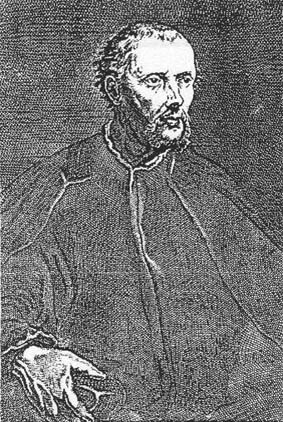
Paracelsus Philippus Aureolus Theophrastus Bombast von Hohenheim known as Paracelsus was born in 1493 at Maria Einsiedeln, Canton of Zurich, Switzerland. Descended from ancient Bombast family of Castle Hohenheim near Stuttgart, Wurtemberg. His father, a physician of repute, possessor of curious books and his mother, matron of a hospital.

Theophrastus, born a year after their marriage. Said to have been emasculated from infancy which accounts for his beardless face and feminine appearance and hatred of women. Studied Alchemy, surgery and medicine with his father. Stimulated to the higher studies by works of Isaac Holland. Continued his studies under monks in Convent of St. Andrew of Savon, later University of Basel. Finally devoted himself to occult science under illustrious Johann Trithemius, Abbott of Spanheim. Later studied under Sigismund Hagger. At age of twenty traveled through Germany, Hungary, Italy, France, Netherlands, Sweden, Denmark and Russia.

In Muscovy was made prisoner and taken to court of the "Great Cham." Acquiring favor was sent to embassy at Constantinople where he was given the sublime secret of Alchemy by a generous Arabian who gave him the universal dissolvent, the Azoth of Western Adepts, that Alcahest or Sophic fire. Thus initiated he traveled through India and Egypt. At age of thirty returned to Germany and performed many marvelous cures. In 1528 proceeded to Colmar. In 1530 he was denounced in Nuremberg as an impostor but confounded his critics by marvelous cures of elephantiasis, of which testimonials are extant in the archives of Nuremberg.

Died after many wanderings, on the 24th of September 1541. Traditions regarding his death differ. One states that he died on a bench of the kitchen fire at the Inn at Strasburg. Another states that "he went to Maehren, Kaernthen, Krain, and Hungary, and finally landed in Salzburg, to which place he was invited by the Prince Palatine, Duke Ernst of Bavaria, who was a lover of the secret arts. He died there after a short illness, at the age of forty eight years and three days, in a small room of the White Horse Inn near the quay, and was buried in the graveyard of St. Sebastian. His death is said to have been hastened by a scuffle with assassins in the pay of the orthodox medical faculty." He was one of the greatest and most illustrious of the long line of notable Alchemists and Initiates of the Order.
Christina DebesCurated by Christina Debes since 2008
KEEP THE LIBRARY FREE

Choose the kind of support that works for you

Individual public-domain books remain free. Paid options provide convenient ZIP archives and help cover hosting, storage, research and preservation.

ONE-TIME

Starter Archive

$12

The Magic Catalog #1 in one curated ZIP file. A simple way to try the archive format.

Get the starter archive
ONGOING SUPPORT

Become a Member

from $5/month

Choose Library Keeper, Archivist or Grand Curator for updates, archive access and a voice in future collections.

See membership levels

Prefer individual books? Continue browsing and downloading them free of charge. Membership is support, not a paywall for the public library.

Make a direct cryptocurrency donation
Bitcoin (BTC network)15Kz1Zuq9FHugjCc3Xamdikdu6irQUHdqG
Ethereum (ETH / ERC-20)0x90c9d66cd07efa5c413551cfd5c2ce03c986b143
The same shelf

More books beside this one

Most taken from the archive
  • 50 Of The Most Powerful Spells On The Face Of Earth
  • Basic Techniques of Sex Magick
  • Book Of Spells
  • Black Book of Forbidden Knowledge Lucid Dreaming
  • The Book Of Shadows
  • The Book Of Secrets
  • Control of The Astral Body
  • White Magic Spells
  • The Book Of Raziel The Angel Or Sefer Raziel HaMalakh
  • The Book Of Thoth
  • Magick In Theory And Practice
  • The Darkside Of The Moon A Complete Course In Magic And Witchcraft

Looking for a book that is not here? It may be in my home library: write to the curator's email and I will try to help — I can send the book by email.