Skip to the archive
Individual books remain freeHelp preserve the shelves
From the archive · Magic Books Catalog #2

Egyptian Myth And Legend

by Donald Mackenzie

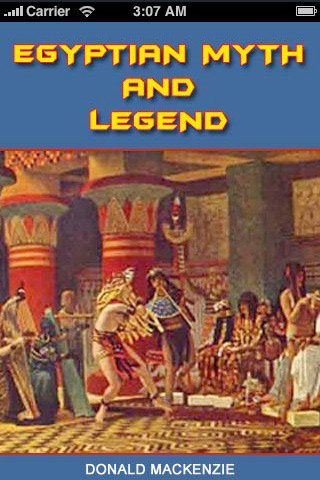
Cover of Egyptian Myth And Legend by Donald Mackenzie

taken from the archive671times

TheCity of the Elf God is described as a strange and enchanting place, reflecting the mystical beliefs of ancient Egyptians. The author details the peculiar nature of this city, which was associated with an elf god, highlighting the blend of the supernatural and the sacred in Egyptian mythology. This episode showcases the unique cultural and religious practices of the time, where even the concept of a city dedicated… Read on ›

AuthorAll books of Donald Mackenzie
FormateBook, 456.0 Kb
ShelvesEgyptian Magic

DarkBooks is a living archive of magical literature, kept since 2008 by its curator and by the readers who support it. Readers have taken 1.9 million books from it — and every one of them stays free. Become one of the keepers ›

About the book

TheCity of the Elf God is described as a strange and enchanting place, reflecting the mystical beliefs of ancient Egyptians. The author details the peculiar nature of this city, which was associated with an elf god, highlighting the blend of the supernatural and the sacred in Egyptian mythology. This episode showcases the unique cultural and religious practices of the time, where even the concept of a city dedicated to an elf god reflects the complex interplay between the mortal and the divine.

Theauthor describes the construction of a grand temple in Tell-el-Amarna, emphasizing its beauty crafted by skilled artisans. The temple was a central feature of Akhenaton's new capital, 'Horizon of Aton,' where the king dedicated his life to the worship of Aton. The temple's daily maintenance involved the placement of bright and perfumed flowers, highlighting the religious devotion and aesthetic significance of the site.

ThePassage describes the mythical tale of John Barleycorn, a symbolic figure representing the life cycle of grain. The author portrays him as a heroic entity who faces various trials, including being wounded and nearly destroyed by his enemies, yet continues to thrive. This narrative reflects the cultural significance of agriculture and the cyclical nature of life in Scottish folklore. The passage also touches on the broader context of early human civilizations, detailing the migration of Mediterranean peoples into the Nile Valley and the blending of cultures that led to the formation of early Egyptian society. The author presents these events as part of a larger historical and mythological framework, highlighting the interplay between natural processes and human endeavors.

A fugitive prince, Senuhet, seeks redemption and returns to his homeland through divine favor. His petition to King Senusert highlights his transformation from a wandering exile to a prosperous individual, emphasizing his faith in the gods. The author portrays the narrative as a testament to the power of divine intervention and the mercy of the king, illustrating how Senuhet's journey reflects the themes of loyalty, redemption, and the influence of deities in human affairs. The concrete detail of Senuhet's plea to the king, 'I have reposed my faith in the god, and lo! he has not failed me,' underscores the central theme of divine support and the importance of faith in achieving one's goals.

In the ancient Egyptian belief system described in the text, the afterlife journey is a rigorous process of judgment and moral accountability. The passage details the soul's trial in the Hall of Justice, where it must confess its deeds to Osiris, the king of the dead. The author emphasizes the strict ethical standards required for entry into the afterlife, with the soul's heart being weighed against an ostrich feather symbolizing Maat, the goddess of truth and justice. This reflects the core belief that moral conduct on earth determines one's fate in the afterlife, challenging the notion of a purely reward-based afterlife by highlighting the importance of ethical behavior and the consequences of sin.

Not every book of the collection can be downloaded because of copyright, although most of them have no such restrictions. If you find a copyright violation, please write to the curator's email: I am attentive to copyright and try to avoid any violation, while helping all who study magic to reach its literature.

Christina DebesCurated by Christina Debes since 2008
KEEP THE LIBRARY FREE

Choose the kind of support that works for you

Individual public-domain books remain free. Paid options provide convenient ZIP archives and help cover hosting, storage, research and preservation.

ONE-TIME

Starter Archive

$12

The Magic Catalog #1 in one curated ZIP file. A simple way to try the archive format.

Get the starter archive
ONGOING SUPPORT

Become a Member

from $5/month

Choose Library Keeper, Archivist or Grand Curator for updates, archive access and a voice in future collections.

See membership levels

Prefer individual books? Continue browsing and downloading them free of charge. Membership is support, not a paywall for the public library.

Make a direct cryptocurrency donation
Bitcoin (BTC network)15Kz1Zuq9FHugjCc3Xamdikdu6irQUHdqG
Ethereum (ETH / ERC-20)0x90c9d66cd07efa5c413551cfd5c2ce03c986b143
The same shelf

More books beside this one

Most taken from the archive
  • 50 Of The Most Powerful Spells On The Face Of Earth
  • Basic Techniques of Sex Magick
  • Book Of Spells
  • Black Book of Forbidden Knowledge Lucid Dreaming
  • The Book Of Shadows
  • The Book Of Secrets
  • Control of The Astral Body
  • White Magic Spells
  • The Book Of Raziel The Angel Or Sefer Raziel HaMalakh
  • The Book Of Thoth
  • Magick In Theory And Practice
  • The Darkside Of The Moon A Complete Course In Magic And Witchcraft

Looking for a book that is not here? It may be in my home library: write to the curator's email and I will try to help — I can send the book by email.